01 · Scan
Scan the key
A sensor in the lock cylinder scans its physical properties. Nothing is attached or engraved.
Every key has unique physical properties. Our sensor scans them, so the key in your pocket becomes a digital pass. No RFID, NFC or chips, no batteries.
It needs no RFID, NFC, chips or batteries to tell what makes each key unique.
Blocked keys don't open.
Two keys cut on the same machine look identical, but their physical properties are not. We scan that difference and turn it into a fingerprint.
A sensor in the lock cylinder scans its physical properties. Nothing is attached or engraved.
Our AI turns the scan into a signature unique to that one key.
The lock checks that exact key, not just its cut, and opens only for approved keys.
You give a key to your cleaner, but only want to let them in on some days. Until now that wasn't possible. With Object Fingerprint, it is.
Lose one key and every lock it opens is at risk.
New locks and new keys for the whole building, after every lost key.
New hardware on every door, and a card, chip or battery for every user.
Swap the cylinder on the few sensitive doors. Every key in every pocket stays the same.
A lost key stops working in one click.
The cleaner gets in on Tuesday mornings only.
Every door opening is logged by name.
Approved keys open. Blocked keys don't.
Organisations with big mechanical key systems and a few sensitive doors: campuses, labs, server rooms and archives. Many people, many doors, a handful that really matter.
| What it checks | Cost grows with | Battery in the key | New wiring | Spots a copy | |
|---|---|---|---|---|---|
| Restricted key profile | who can buy a blank | — | no | no | no |
| Stamped serial number | a number stamped on the key | — | no | no | no, the copy carries it |
| Electronic key cabinet | a tag on a cable tie | users | no | no | no |
| Chip keys (CLIQ) | a chip in the key | users | yes | every cylinder | prevents copies, can't spot them |
| iLOQ | a chip in the key | users | energy harvested | every cylinder | prevents copies, can't spot them |
| Smart locks & cards | a phone or a card | users | n/a | every door | n/a, no key left |
| Object Fingerprint | the key itself | doors | no | depends on the door | being tested now |
Their cost grows with every user, ours with the doors you protect. Three employees and one entrance? Chip keys are the right answer, and we'd say so.
Our research began with recognising surgical instruments. See that market.
Four people covering the whole product, from sensor to sale.

PhD researcher at the Faculty of Biomedical Engineering, Czech Technical University in Prague. His university research on identifying surgical instruments is the science behind Object Fingerprint.
He leads the company and the product, and won the pitching contest at the NTK Knowledge Transfer Academy.

From the Prague University of Economics and Business (VŠE).
At Object Fingerprint he runs the numbers, fundraising and partnerships.

Biomedical engineer and graduate of the Faculty of Biomedical Engineering, Czech Technical University in Prague.
He builds the sensor and the AI model, and leads the path to certification.
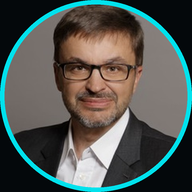
30 years in the lock industry, formerly with ASSA ABLOY.
His network of locksmiths and security installers is our sales channel for physical keys.
Our project took first place at the grand final in Prague, pitching to an expert jury and investors.
A semester-long programme of the National Technical Library in Prague that takes research to industry and investors.
Read on VědaVýzkum.czFacebook post by FBMI CTU
Open it on Facebook
Next stop: Stage Two in Berlin on 23 October. Want to meet there, on a call or in Prague? Book a meeting and we'll confirm the time.
Europe's largest university venture competition, at Radialsystem. We pitch in the semi-final at 10:00.
Not in Berlin? Book a video call, a meeting in Prague or anywhere that suits you.
Investors, customers or installers: leave a short note and we'll reply soon.